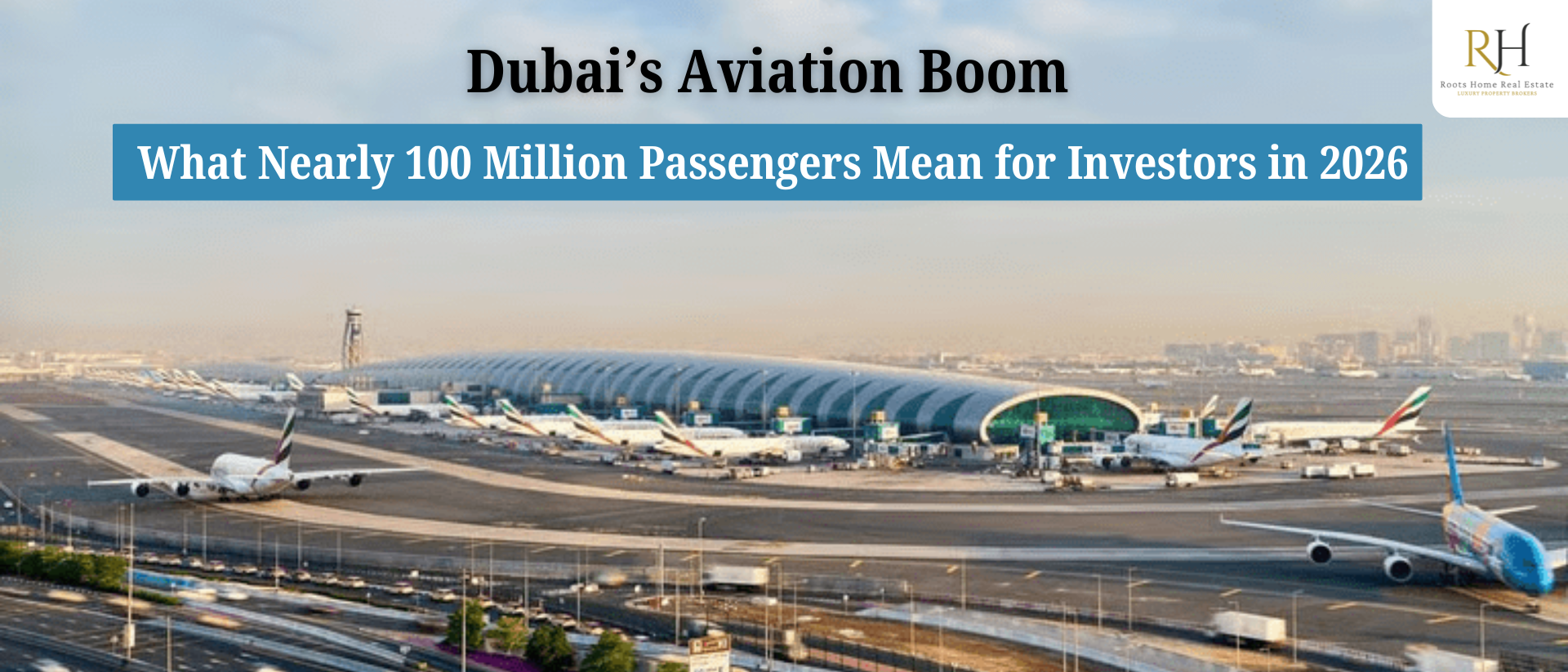
Dubai’s Aviation Boom: What Nearly 100 Million Passengers Mean for Investors in 2026
Dubai is not just growing. It is accelerating.
In 2026, Dubai International Airport is expected to handle close to 100 million passengers, placing it among the busiest airports in the world. At the same time, the city is investing billions into the expansion of Al Maktoum International Airport, which is planned to become the world’s largest aviation hub in the future.
For investors, this is not just aviation news. This is a powerful signal about Dubai’s long-term economic direction, population growth, real estate demand, and global positioning.
This blog explains why this matters and how smart investors can interpret this trend.
Dubai’s Tourism and Global Connectivity Surge
Dubai has positioned itself as a global gateway connecting Europe, Asia, Africa, and the Middle East. With record-breaking passenger numbers, the city is strengthening its role as a global transit, tourism, and business hub.
The rise in passenger traffic reflects:
- Growing tourism demand
- Increasing global business activity
- Strong expatriate inflow
- Expanding airline routes and global connectivity
This connectivity is a core driver of economic activity and investment opportunities.
Why This Matters for Real Estate Investors
1. Rising Demand for Residential Properties
More passengers do not just mean tourists. It also means more expatriates, professionals, and long-term residents relocating to Dubai.
This leads to:
- Higher demand for apartments and villas
- Increased rental occupancy rates
- Stronger property price stability
For investors, sustained population inflow is one of the strongest fundamentals for real estate growth.
2. Short Term Rentals and Hospitality Boom
Tourism directly fuels:
- Hotels
- Holiday homes
- Airbnb and short term rentals
As visitor numbers increase, occupancy rates remain high, driving higher rental yields in tourist hotspots such as Downtown Dubai, Dubai Marina, Palm Jumeirah, and Business Bay.
3. Commercial and Office Space Growth
Global passenger traffic also reflects rising corporate activity.
More multinational companies are setting up regional headquarters in Dubai, increasing demand for:
- Office spaces
- Retail outlets
- Logistics and warehouse facilities
This creates opportunities in commercial real estate and industrial property investments.
Economic Impact: A Strong Signal for Business Investors
Aviation growth is closely linked to GDP growth, trade, and global business activity. Dubai’s expansion in aviation indicates:
- Strong government confidence in future growth
- Continued foreign direct investment inflows
- Expansion of trade, tourism, and services sectors
For business investors, this environment supports startups, franchises, hospitality ventures, and international trade businesses.
Long Term Vision: Dubai’s Mega Airport Expansion
Dubai’s Al Maktoum International Airport expansion is part of a long-term vision to handle hundreds of millions of passengers annually. This is not a short-term project; it is a multi decade strategy.
Such infrastructure investments typically lead to:
- New cities and communities around the airport
- Massive real estate developments
- Growth in logistics, aviation, and tourism sectors
Early investors in surrounding areas often benefit from long-term capital appreciation.
Investor Risks and Realistic Expectations
While the outlook is strong, smart investors should understand market dynamics:
- Property price growth may moderate due to new supply
- Some areas may experience short term corrections
- Quality location and developer selection is critical
Dubai’s market is maturing, meaning informed and strategic investing matters more than speculative buying.
Key Takeaway for Investors
Dubai nearing 100 million passengers is more than a record. It is a signal of global relevance, economic strength, and sustained demand for real estate and business opportunities.
For investors, this means:
- Strong rental demand
- Continued capital appreciation potential
- Expanding commercial and hospitality sectors
- Long term infrastructure driven growth
Dubai is evolving from a regional hub into a global mega city economy, and aviation is one of its strongest engines.
Conclusion
Infrastructure, connectivity, and global migration are the pillars of long-term real estate and business growth. Dubai’s aviation boom shows that the city is investing heavily in these pillars.
For investors seeking stability, global exposure, and high yield opportunities, Dubai remains one of the most compelling markets in the world.
If you are considering investing in Dubai real estate or business opportunities, focus on location, developer credibility, and long term demand drivers such as tourism and infrastructure.